
8–9M
Speakers
Approximately 8–9 million speakers worldwide, with the majority concentrated in Mali, Niger, Benin, and Nigeria.
Welcome to Songhay Online
A comprehensive, evolving platform dedicated to documenting the Songhay language and its environment — for speakers, learners, and researchers.
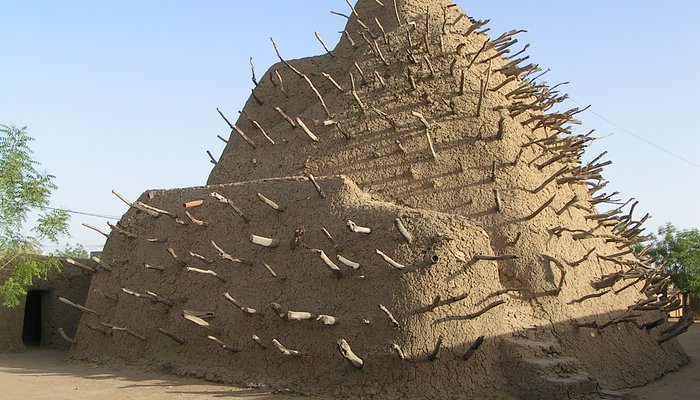
Linguistics
A language spoken primarily in West Africa along both banks of the Niger River valley and across the Sahara, with several major dialects reflecting the geographic and historical distribution of its speakers.
Approximately 8–9 million speakers worldwide, with the majority concentrated in Mali, Niger, Benin, and Nigeria.
Usually classified within the Nilo‑Saharan family, and sometimes treated as a linguistic isolate.
Traditionally written in Arabic Ajami, today commonly represented using a standardized Latin-based script.
Geography
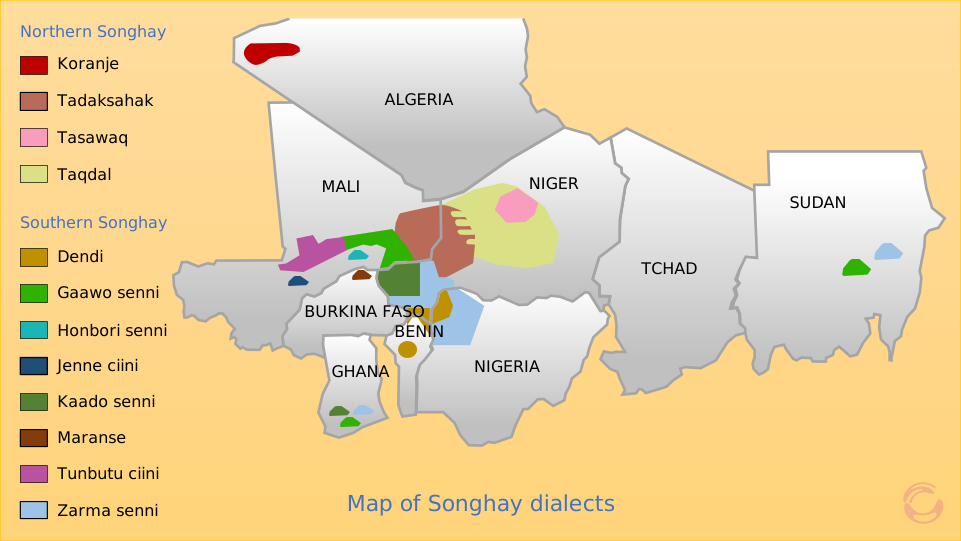
Songhay is classified into two groups: Southern Songhay along the Niger River, and Northern Songhay across the Sahara — with an additional community in the Tabelbala oasis, south-western Algeria.
Largest concentration — Tillabéri, Niamey, Dosso, and northern regions.
Timbuktu, Gao and Menaka regions; also Djenné, Hombori in the Mopti region.
Dendi dialect along the Niger River and around Djougou.
Established communities in the northern and northeastern regions.
Zarma-Dendi communities in the northwest, often bilingual with Hausa.
Sudan, neighbouring countries, Europe, North America, and beyond.
Tools & Resources
Four bilingual dictionaries, with over 80,000 entries.
Academic and literary publications, and online lessons.
A collection of plants, animals, and cultural images.
On‑screen keyboard for typing Songhay’s special characters.
Open‑source utilities for writing and typing, plus a drawing tool.
Scholarship
Early Arabic manuscripts reveal scattered traces of written Songhay using the Ajami tradition — no systematic linguistic study existed yet.
Hacquard and Dupuis-Yakouba produced the first structural and lexicographic studies of the Timbuktu dialect. Delafosse and Ardant du Picq extended research eastward to Zarma.
Prost's La langue soŋay et ses dialectes (IFAN, 1956) provided the first systematic classification, with a central reference dialect.
DNAFLA in Mali and the IRSH in Niger led Songhay documentation, producing dictionaries and educational materials alongside international scholars.
Research extends into digital tools, open-source localisation, and multimedia lexicons.
Get Involved
Despite significant research over the past century, Songhay remains underrepresented online. Help change that by contributing to open-source projects and community-driven translation efforts.
Contact the Team →